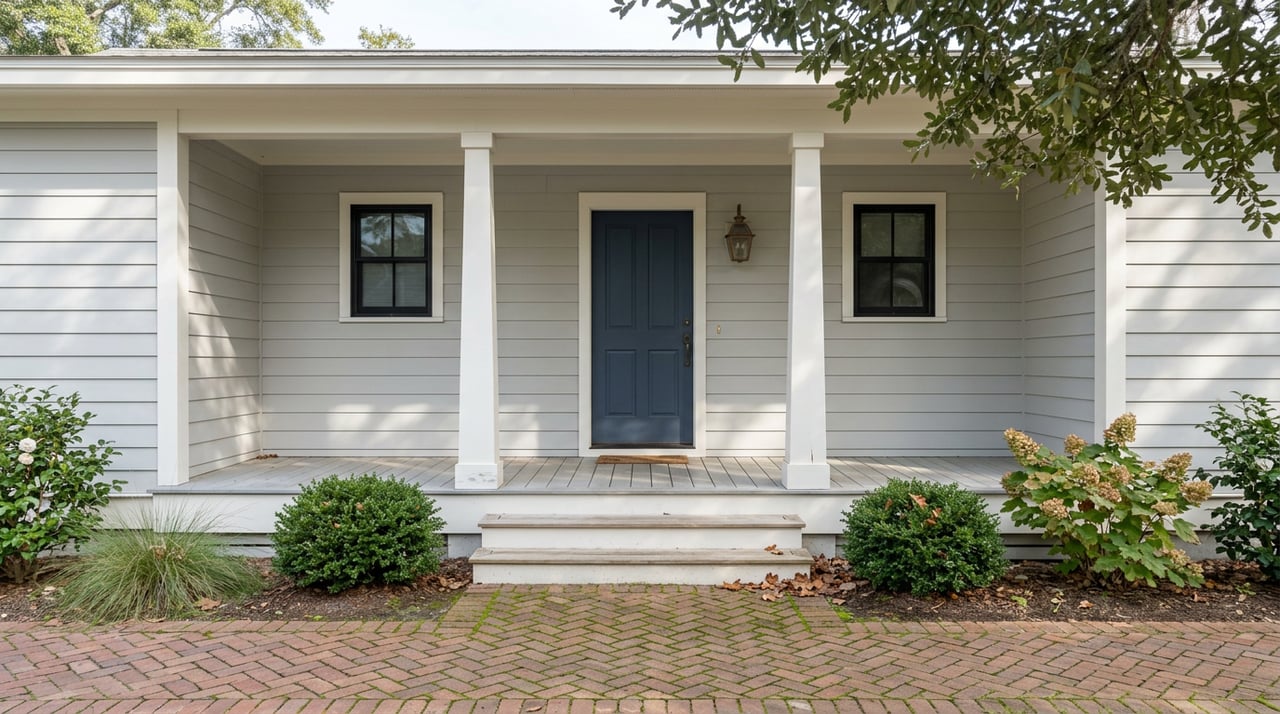
The Real Reason the North End Still Looks Like the North End
August 13, 2026
August 13, 2026
In the early 1990s, one North End homeowner got tired of watching fences, additions, and lot-line exceptions glide through city review unchallenged. Her name was Rosalie Cheshire, and instead of writing a letter, she started showing up to the hearings herself, year after year, one resident pushing back against what the neighborhood's own civic league now describes as a process where nearly every variance request got approved as a matter of course.
That frustration is the origin story, by the North Virginia Beach Civic League's own account, of the group that has quietly reviewed how this neighborhood grows for more than a quarter century. Most people who live here know the acronym NVBCL from a yard sign or a newsletter in the mailbox. Fewer know that the committee behind it functions less like a passive homeowners association and more like a standing jury, one that has looked at a case file for nearly every meaningful home project in the North End since January 1998.
The Zoning Review Committee wasn't handed down by the city. It was built by neighbors who decided the existing process wasn't giving them a real say. After years of Cheshire raising objections largely on her own, the civic league formalized the effort into a standing committee in 1998, and it has run the same way ever since: a group of volunteers meets once a month, hears directly from anyone proposing a variance, conditional use permit, subdivision change, or right-of-way closure, visits the site in question, and then sends the city a formal position of opposition or no opposition.
What makes the committee unusual isn't just that it exists. It's who sits on it. The same twelve-person roster has stayed largely intact the entire time, drawn from local businesspeople, real estate professionals, developers, architects, landscape architects, and land planners rather than rotating political appointees. That mix means a proposed second story or a request to build closer to a setback line gets read by people who actually understand construction drawings and site plans, not just civic-minded volunteers doing their best with unfamiliar paperwork.
Twelve volunteers. More than two decades. Well over 700 cases reviewed, by the league's own count, and likely closer to 900 by now.
That last number is worth sitting with. The civic league's own zoning history page puts the tally at "well over 700" variance applications reviewed during the committee's first 22 years, a stretch that runs from 1998 to roughly 2020. At that pace, a little over 30 cases a year, the running total today, six years and one full pandemic later, is almost certainly approaching 900, though the league's website still shows the original tally. For a neighborhood built almost entirely of single-family lots, that is not occasional oversight. It is closer to a review of nearly everything that changes.
Here's the part most residents get backwards. Many assume that if a project needs a variance, the process starts and ends with the city's Planning Department and Board of Zoning Appeals. In the North End, the civic league's committee is functionally the first stop. An applicant presents plans, the committee reviews the site and the architectural drawings, sometimes walks the property in person, and only after that does a letter go out stating the committee's position. That letter lands on the desks of city planners and the Board of Zoning Appeals before the public hearing even happens.
| What residents often assume | What's actually happening |
|---|---|
| The city is the only body evaluating a neighbor's addition or variance | A volunteer committee reviews the plans first and sends the city a formal position |
| Zoning consistency is maintained entirely by code enforcement | The same twelve-person committee has provided the institutional memory that outlasts any single ordinance update |
| A civic league is mostly a newsletter and a yard sale | This one has a documented paper trail on more than 700 individual property cases, and counting |
None of this makes the committee's recommendation legally binding. The Board of Zoning Appeals still holds the actual authority. But a group that has sat through hundreds of these hearings, and remembers what was approved a few doors down years earlier, brings a kind of continuity that a city planning staff, however capable, simply can't replicate case by case.
If you've ever wondered who to talk to about a paving schedule, a proposed fence height, or why the newsletter shows up when it does, the answers are public and specific:
None of these are paid positions. They are neighbors doing the unglamorous work of tracking permit applications and paving contracts so the rest of the block doesn't have to.
If you've attended a civic league event in the past year, there's a good chance it happened on the campus of Edgar Cayce's A.R.E., the Association for Research and Enlightenment, at 215 67th Street. The league's April 2026 general membership meeting was held in the A.R.E. Auditorium, and the 2026 Trunk or Treat is scheduled there for Saturday, October 24, with a rain date the following Tuesday.
It's an odd pairing on paper, a neighborhood zoning committee and an internationally known research organization sharing the same address book, but it makes sense once you know the campus. A.R.E. was founded in 1931, and its original building at 67th Street opened in 1928 as the Cayce Hospital, one of the oldest structures still standing in the city, now home to a health center and spa and listed on Virginia Beach's historic register. The grounds include a public meditation garden, a stone labyrinth, and the Leaping Lizard Café, and the organization draws more than 100,000 visitors a year to that single Virginia Beach campus. Every winter it also hosts its own Grand Illumination, a labyrinth walk and hot cocoa gathering open to the neighborhood, separate from anything the civic league runs.
For a residential enclave with no commercial strip of its own, A.R.E.'s auditorium and grounds have become the closest thing the North End has to a town common. Civic meetings, holiday gatherings, and a Halloween event for kids all happen on the same few acres, which says something about how a neighborhood without a main street still manages to have a center of gravity.
Put the two threads together and the picture is clearer than either fact alone. The North End's low, consistent scale, the reason additions here tend to blend in rather than tower over the house next door, isn't purely a function of the city's zoning code. It's maintained, case by case, by a volunteer committee that has now reviewed something close to 900 property decisions since one resident decided the rubber stamp needed a second set of eyes. And the meeting where you'd learn about the next paving schedule or the next zoning question up for review is as likely to happen in a building constructed in 1928 as it is in any city office.
None of this requires you to be building anything. If you've ever wondered why your street still looks the way it did a decade ago, or who to ask before a neighbor's addition goes in, the answer has a name attached to it, and it isn't the city.
If you're curious how a neighborhood's zoning history and civic character tend to hold up over time, that's exactly the kind of local detail our team tracks daily. Missy L'Hoste & Team has spent years watching how neighborhoods like the North End actually function, not just how they show up on a map. If you'd ever like a straightforward, no-pressure conversation about what's happening in the market here, or just want a second set of local eyes on a question, reach out and schedule a free local market consultation whenever it's useful to you.

Our knowledge of the area will allow us to focus on the best strategy to not only achieve your goals, but to exceed your expectations. We know how to take control and get the job done to your complete satisfaction. Work with the team now!